1,092 questions on six manuals, three times. With the failures explained.
Our figures on public manuals that anyone can download, with dates, with every failure explained and with the method, so they can be challenged.
1,037 of 1,092 questions are answered correctly all three times.
| Run | Correct | Made-up figure |
|---|---|---|
| 15 Nov | 97.4% · 1,064 / 1,092 | 2 |
| 16 Nov | 97.6% · 1,066 / 1,092 | 0 |
| 17 Nov | 97.2% · 1,061 / 1,092 | 0 |
Six machines, 850 pages.
- Correct
- 98.8% (889/900)
- Made-up figure
- 0
- Pages
- 251
- Manual in
- Spanish
- Correct
- 98.8% (406/411)
- Made-up figure
- 0
- Pages
- 95
- Manual in
- Spanish
- Correct
- 98.1% (456/465)
- Made-up figure
- 1
- Pages
- 146
- Manual in
- English
- Correct
- 96.2% (459/477)
- Made-up figure
- 1
- Pages
- 132
- Manual in
- English
- Correct
- 95.9% (567/591)
- Made-up figure
- 0
- Pages
- 140
- Manual in
- English
- Correct
- 95.8% (414/432)
- Made-up figure
- 0
- Pages
- 86
- Manual in
- Spanish
How the 3,276 answers came out.
| Label | What it means | Answers |
|---|---|---|
| Correct | Gives the figure or the steps and cites a page where they are. | 2,818 · 86.0% |
| “Not in the manual”, correctly | The manual does not include it and it says so, without making anything up. | 373 · 11.4% |
| Wrong page | The figure is correct, but the cited page does not contain it. | 28 · 0.9% |
| Incomplete | Partly right; an essential step or value is missing. | 15 · 0.5% |
| “Not in the manual”, but it was | Says it cannot find it, but the manual does include it. | 15 · 0.5% |
| Incorrect | Gives a figure from the manual that does not apply: another row, another model. | 25 · 0.8% |
| With a made-up figure | States something the manual does not say, even if the rest is right. | 2 · 0.1% |
Separately from the label, 43 answers had part of the text in a language other than the question's. And 0 citations pointed to a passage the assistant did not have in front of it.
The 2 answers, one by one.
It gets the meaning of the fault code right, but expands the acronym EMS as “Emergency Management System, according to the manual”. The manual does not spell out that acronym on any page.
It gets the tyre pressure right (90 psi), but adds that if the sticker on the rim gives a different value, the machine's value applies. The manual names both places without saying which prevails.
What is asked and how it comes out.
How it is measured, so it can be challenged.
What is asked
1,092 questions on six public manufacturer manuals, 850 pages in total, asked the way an operator would from the machine's QR label: figures, steps, safety, codes and warnings, and why the machine does what it does. 124 are control questions: they ask about something the manual does not include, and the right answer is to say so. 125 are in English, French or Portuguese, and three of the manuals are in English.
How the questions were written
A language model drafted them page by page, with the expected answer and page. Each one passed two checks: the sentence in the manual that proves the answer must appear, word for word, on the stated page, and a second model reviewed the expected answer against the manual. 15 ambiguous or badly framed questions and 13 duplicates were removed, and 16 expected answers were corrected.
How each answer is judged
A model (Claude Sonnet) reads the question, the expected answer, the assistant's answer and the text of the manual, and gives it one of the seven labels. In the first run, a second model (Claude Opus) reviewed every failure and a random sample of 90 correct answers, and changed none of the sample. In the second and third runs, an answer with no new figure or page keeps the first run's judgement; the rest, about 480 per run, are judged again.
How it is run
With the same code and configuration that serve customers, asking without an account through the QR label of test machines, as an operator would. The model that writes the answer does not use the same wording every run, even when the facts are the same. That is why there were three runs, on 15, 16 and 17 November, and all of them are published. A mechanical check also confirms that every citation points to a passage the assistant actually had in front of it.
What this benchmark does not show
It measures faithfulness to the manual, not whether the manual is right. These are public PDFs with text; a scanned or photocopied manual is measured separately. The figures come from our reference instance, not an average across customers. The brands belong to their manufacturers, who have no connection with this benchmark.
Every run, with its date.
Three complete runs: 3,191 of 3,276 answers correct (97.4%) and 2 with a made-up figure, both in the first run. 95% of questions are answered correctly all three times. Next to fix are the most repeated failures: citing the neighbouring page, reading the next column of a table, and starting some “not in the manual” answers in English.
First of three runs on six public manuals: 1,064 of 1,092 correct (97.4%), 2 answers with a made-up figure and 15 with part of the text in another language.
Your own machines' manuals? We measure them in the demo.
In a 20-minute demo we ask your manuals the questions your team asks. With your permission, we publish the result here.
- Emailinfo@manualalinstante.es
- Phone694 459 488
- VideoWatch it work in one minute →
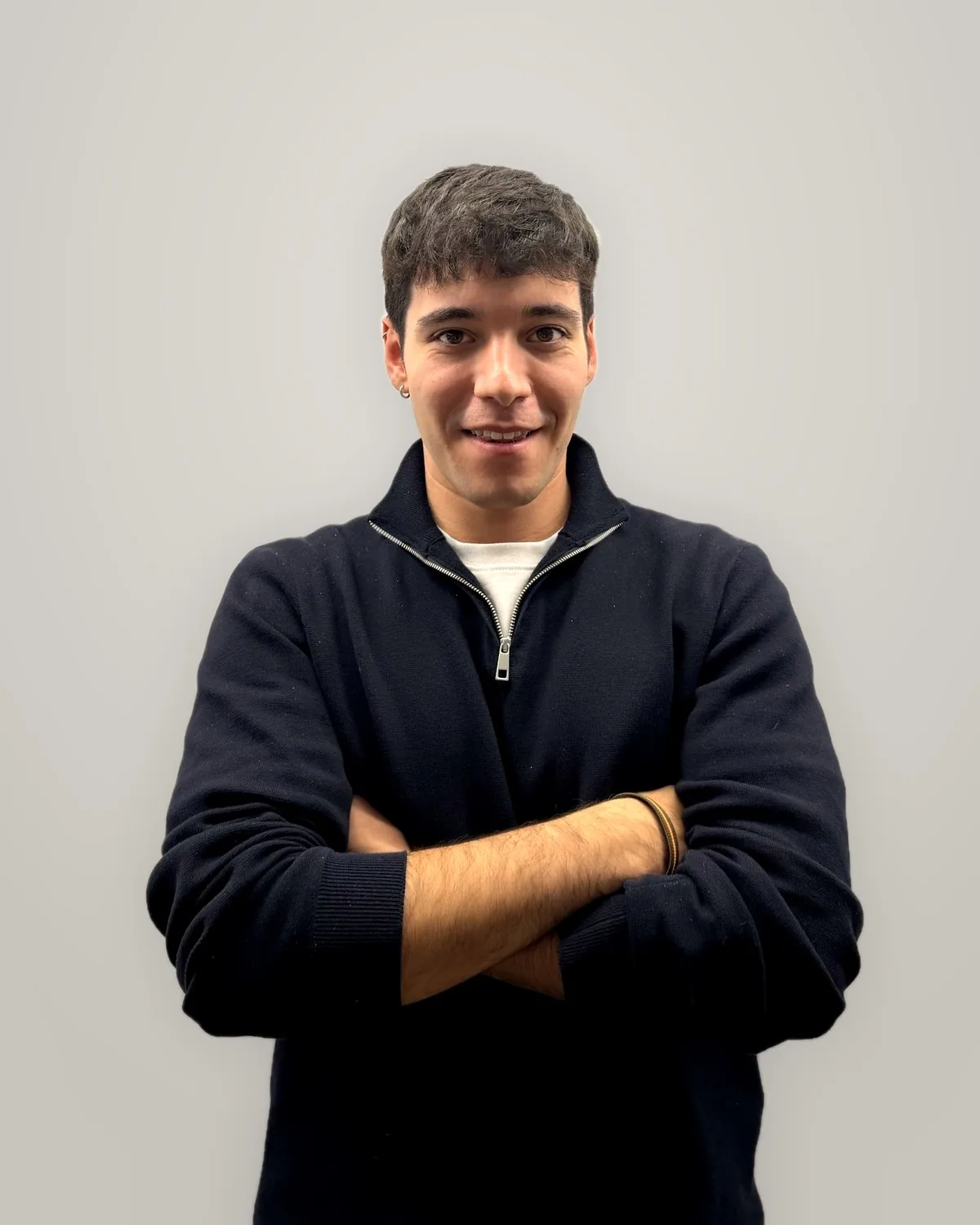
Gabriel Martín, founder, and Adrián Verdejo, chief technology officer. We build Manual al Instante in Valladolid.
Gabriel on LinkedIn →